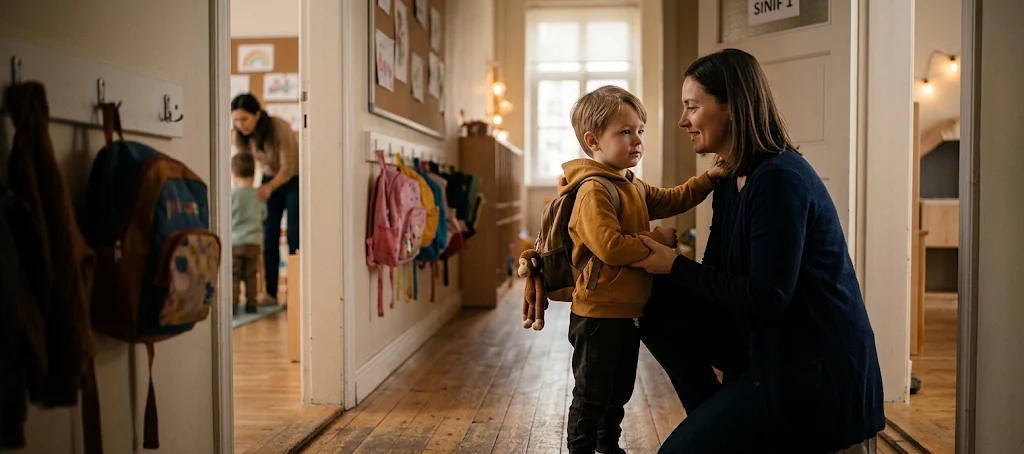
Separation anxiety in children is the distress or worry a child experiences when apart, or expecting to be apart, from a parent or another familiar caregiver. A child may cry, cling to the caregiver or resist leaving. Separation anxiety is common in infancy and early childhood and can be part of a child’s developing need for safety and connection. Becoming upset during separation is particularly common between about six months and three years of age.
How Does Separation Anxiety Develop?
Young children rely on familiar adults to feel safe. A parent leaving the room, a child being dropped off at nursery or staying with another caregiver can feel like a significant event, even when the separation is temporary. Children who are still developing an understanding of time may not know when their caregiver will return. This uncertainty can lead to worries that the separation will last a long time or that the caregiver may not come back.
Separation anxiety varies from child to child. Temperament, previous experiences and changes in a child’s life can influence how strongly it appears. Starting school, moving house, being unwell or experiencing a change in family circumstances may coincide with increased anxiety or a greater need for reassurance. These reactions do not, on their own, mean that something is wrong with the child’s development.
What Are the Signs of Separation Anxiety in Children?
Common signs include crying, clinging to a caregiver and refusing to separate. A child may worry that something bad will happen to a parent while they are apart. They may also resist going to school or nursery, feel uncomfortable sleeping alone, or become distressed when the caregiver is out of sight.
Anxiety can also be expressed through physical complaints. A child may report stomach aches, headaches or nausea as a separation approaches, such as before school. Other signs can include difficulty falling asleep, going to a parent during the night, having nightmares and frequently seeking reassurance. Some children become upset as soon as they anticipate a separation; others react more strongly once they realize that their caregiver is not nearby.
Children do not all express anxiety in the same way. Younger children may not yet have the words to describe their feelings. Their distress may instead appear as irritability, crying, anger or physical complaints. Older children may be more able to explain what they fear about being away from a caregiver.
Developmental Separation Anxiety and More Intense Anxiety
Feeling upset during separation is common in young children. As children grow and better understand that a caregiver will return, these reactions often become less intense. The strength of the anxiety and its effect on the child’s daily life are also important.
If anxiety continues, grows more intense or significantly affects a child’s school attendance, friendships, sleep or everyday activities, it may need closer assessment. Separation anxiety disorder is a clinical term for persistent and excessive fear about being separated from home or from an attachment figure, when the distress is greater than would generally be expected for the child’s developmental stage and interferes with daily life. The distinction cannot be made from one sign alone; a child’s developmental level, circumstances and pattern of symptoms all matter.
What Separation Anxiety Means for a Child
Separation anxiety is an emotional response to the possibility of being apart from someone a child depends on. It can occur during ordinary development and does not automatically mean that a child has a mental health disorder. The intensity, duration and impact of the anxiety are central to understanding what the child may be experiencing.