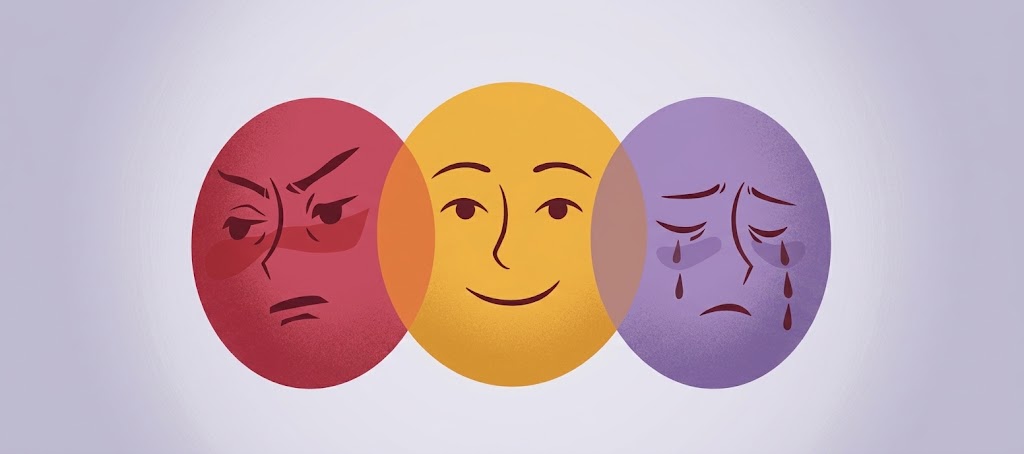
“How do you feel?” is not an easy question for everyone to answer. Someone may know that they have had a difficult day but cannot tell whether they feel sad, angry, anxious, or disappointed. At other times, they may sense an emotion without finding the words to describe it. Alexithymia is a psychological concept used to describe difficulty identifying and expressing one’s own feelings.
Alexithymia does not mean having no emotions. A person may experience feelings intensely while finding it difficult to recognise them, distinguish one emotion from another, or communicate what is happening inside. Someone who appears calm or distant to others may therefore be trying to make sense of an experience they cannot yet put into words.
What Are the Main Features of Alexithymia?
One common feature is difficulty identifying feelings. A person might leave a conversation feeling unsettled without knowing whether they are hurt, frustrated, or angry. Another is difficulty describing feelings to someone else. They may say, “I feel bad,” but struggle to explain the experience more precisely.
Some people also focus more readily on events and practical details than on their inner experience. When describing an argument, they might remember exactly what each person said but find it harder to say what they felt at the time. These features do not appear in the same way for everyone. They should not be used on their own to label a person or make a diagnosis.
How Are Emotions and Physical Sensations Connected?
Emotions can involve physical changes. Anxiety may come with a racing heart, anger with muscle tension, and sadness with tiredness. Someone who finds emotions difficult to name may notice the physical sensation first. They might describe a tight throat, a heavy chest, or a feeling in their stomach without knowing which emotion accompanies it.
This does not mean that physical symptoms should automatically be explained as psychological. New, severe, or persistent symptoms may need medical assessment. Understanding alexithymia means considering emotional experience alongside physical health, rather than dismissing either one.
Paying attention to context can sometimes help. What happened shortly before the sensation appeared? Was there a difficult conversation, an unexpected demand, or a change of plans? Such questions do not provide instant answers, but they can help a person begin to connect events, bodily sensations, and feelings.
How Can Alexithymia Affect Relationships?
Sharing feelings is one way people build understanding in close relationships. A person who struggles to identify emotions may find it hard to answer when a partner asks, “What upset you?” The partner might interpret the silence as unwillingness to talk or a lack of interest. In reality, the person may still be trying to understand their own reaction.
It can also be difficult to communicate a need without recognising the feeling behind it. Anger, disappointment, or loneliness may remain a vague sense that something is wrong. This does not determine the outcome of a relationship, but finding words for emotions can make it easier to explain what one needs and to understand another person’s response.
What Causes Alexithymia?
There is no single cause that explains alexithymia in every person. Emotional experiences, developmental history, and a person’s current circumstances may all be relevant. Someone who had little opportunity to talk about feelings while growing up may be less accustomed to expressing them as an adult. Intense stress can also make feelings harder to distinguish at a particular time.
These possibilities should not be turned into assumptions about any individual. Difficulty describing emotions can develop or appear in different ways, and it may occur alongside other mental health concerns. Understanding the person’s own experience is more useful than trying to fit everyone into one explanation.
Is Alexithymia a Mental Disorder?
Alexithymia is not a psychiatric diagnosis on its own. It describes a pattern of difficulties involving emotional awareness and expression. Most people occasionally struggle to work out what they feel, especially immediately after a complicated or upsetting event. The term alexithymia is used when such difficulties form a more noticeable, ongoing pattern.
Recognising yourself in an online description is not enough to make a diagnosis. If difficulty understanding or communicating emotions is affecting your relationships, daily life, or wellbeing, speaking with a qualified mental health professional may help you explore what is happening.
Can Psychotherapy Help With Alexithymia?
Therapy does not require someone to describe every feeling clearly from the first session. The work may begin with specific events: what happened, what the person noticed in their body, what thoughts arose, and how they responded. Over time, they may become better able to distinguish whether “I feel bad” refers to hurt, fear, shame, anger, or something else.
The goal is not to find the perfect word for every emotion immediately. It is to develop a more curious and understanding relationship with one’s own experience. Emotional awareness may grow gradually. Even small changes in what a person can notice and communicate may make it easier to understand themselves and connect with others.