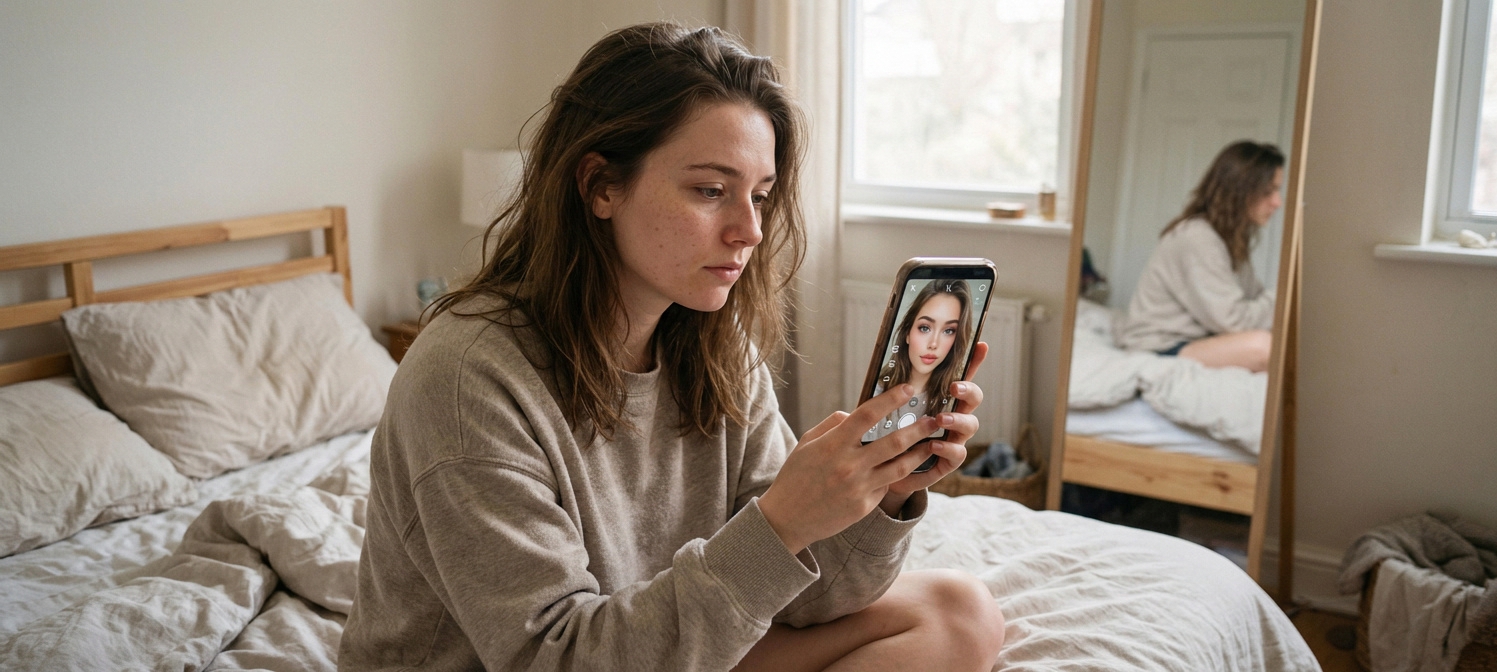
How Do Social Media Filters Affect Body Image?
Social media filters make it easy to alter faces and bodies in photos and videos. Smoothing skin, sharpening facial features, or changing the overall appearance of an image can take just a few taps. Using a filter does not, by itself, indicate a mental health problem. However, frequently viewing filtered images or editing one’s own appearance may influence body image and thoughts about how one looks for some people.
Body image includes a person’s thoughts, feelings, and evaluations about their body. It is shaped not only by physical characteristics but also by personal experiences, social environments, and beauty standards. Social media filters do not determine body image on their own, but they can play a role in how people evaluate themselves and others.
How can filters shape unrealistic beauty standards?
Some filters change the appearance of skin, narrow facial features, or move an image closer to popular beauty ideals. When people encounter these images regularly, they can begin to feel like a visual norm. An unfiltered appearance may then seem less polished or less acceptable. Knowing that many photos are edited does not always remove their emotional impact.
People may compare an unfiltered image of themselves with its filtered version or with other people’s edited photos. Over time, this can increase attention to appearance and narrow the way someone evaluates themselves. In one study, TikTok facial filter use was associated with body image concerns and facial dissatisfaction among young adult participants. However, the study showed an association; it did not establish that filter use directly caused those outcomes.
Do filters affect everyone in the same way?
No. A person’s reasons for using filters and their relationship with filtered content matter. Some people use filters for fun or creativity, while others may edit their appearance in the hope of receiving more approval. Self-esteem, social environment, current stressors, and the type of content someone sees can also shape the experience.
Research findings are not uniform. A 2026 experimental study found no significant difference in body satisfaction after participants viewed certain filtered versus unfiltered TikTok content. Another experimental study observed increased body dissatisfaction after exposure to some beauty filters. These differences suggest that effects may vary according to the type of filter, the context of the content, and individual factors.
Social comparison and self-worth
On social media, people often share selected and edited images. Users therefore see carefully presented moments rather than the full range of someone’s everyday life. Comparing an ordinary, unedited image of oneself with another person’s edited photo can reinforce unrealistic expectations.
When appearance becomes the main measure of self-worth, a person may experience greater body dissatisfaction, self-criticism, or avoidance of social situations. Still, not every use of a filter leads to these outcomes, and people’s experiences with social media differ. It can be more helpful to consider a person’s broader relationship with themselves than to focus on one photo or filter.
Is more mindful social media use possible?
A useful first step is to notice how particular accounts and images affect you. If certain content leads you to criticise your body more or check your appearance repeatedly, taking a break from it or adjusting your feed may help. Remembering how filtered images are created and edited can also support a more critical view of digital content.
The aim is not to ban filters or assume that every use is harmful. What matters is noticing how filter use affects a person’s body image, self-worth, and everyday life.
When body image concerns become distressing
If thoughts about appearance become intense, affect daily life, or lead someone to withdraw from relationships and activities, professional support may be helpful. In therapy, a person can explore experiences that have shaped their body image and the way they speak to themselves. The aim is not to meet a particular appearance standard, but to create space for a more balanced and compassionate relationship with oneself.